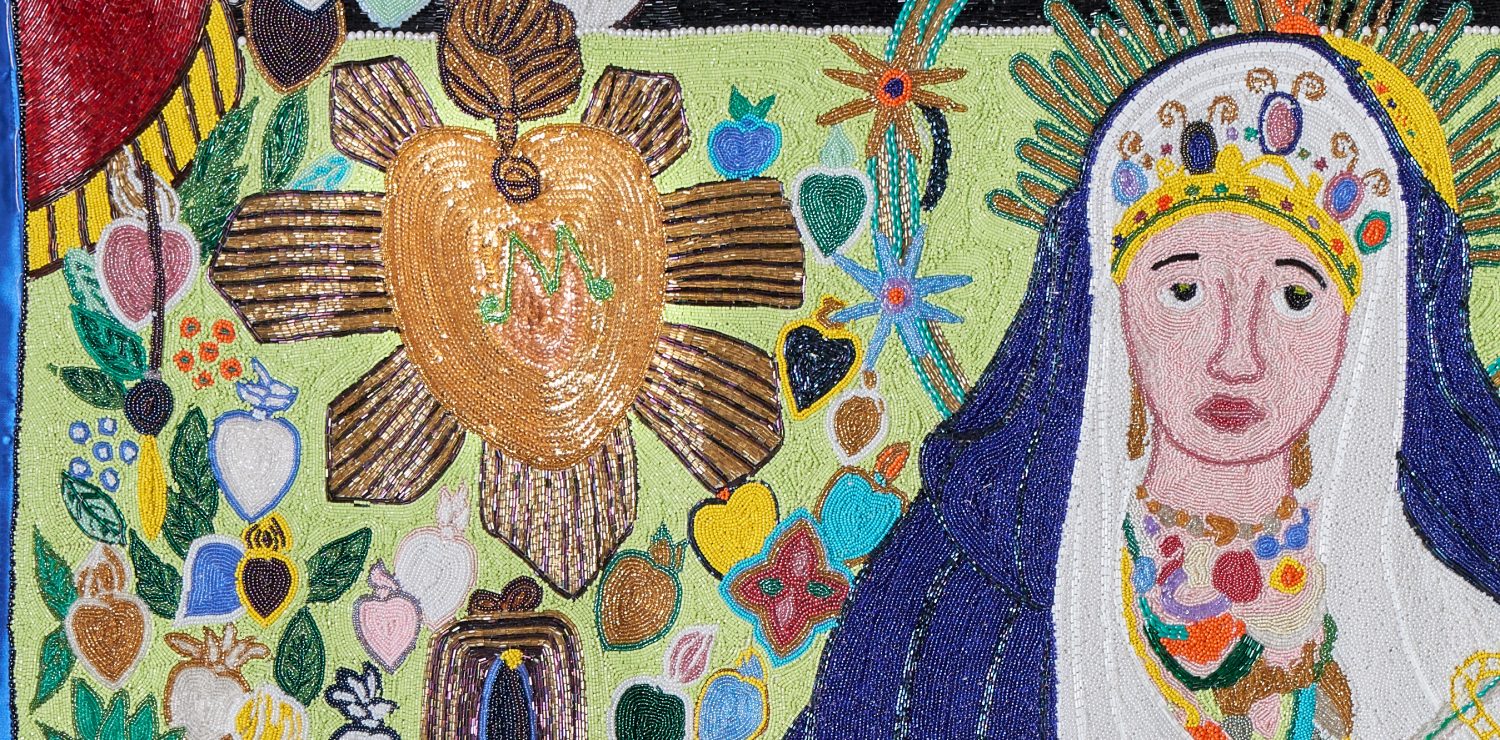
What is the Haitian Arts Digital Crossroads?
Goal: The ultimate aim is a comprehensive, publicly accessible digital catalog of Haitian artists and their works—contemporary masters, historical figures, and emerging voices alike.
Mission: HADC is a grant-funded project (supported by the National Endowment for the Humanities / HCRR) spearheaded by Grinnell College Libraries in partnership with the Waterloo Center for the Arts (WCA). Its purpose is to digitize, catalog, and provide broad access to Haitian art collections—combining art-historical scholarship, museum practices, and digital humanities.
Scope: HADC works not only with the WCA collection but also with partner institutions in Haiti, the U.S., and elsewhere to preserve and document Haitian visual culture wherever it resides.
Key Features & Components


Digital Catalog & Online Platform: The site promises a growing digital catalog of Haitian art. Users can explore artworks from various media: paintings, sculptures, drapo (Vodou/sequined flags), mixed-media works, and more.
“Going Beyond Provenance” Methodology: HADC doesn’t simply record basic metadata. It proposes a more expansive metadata schema that accounts for context, materials, language (including Haitian Kreyòl), and the fuller histories of artworks, collections, and artists—stressing ethical cataloging, cultural context, and archival completeness.
Virtual Communal Space (“Digital Lakou™️”): HADC envisions a “lakou”—a shared, collaborative digital space—where institutions, researchers, and communities across the diaspora can contribute, connect, and participate in ongoing curation, interpretation, and preservation.
Bridging Archives, Collections & Artworks: The project links archival sources, vertical files, institutional collections, and artworks themselves—aiming to surface material that often remains scattered or undocumented, helping reconstruct fuller histories of Haitian art.
Multimedia & Public Engagement: The site includes sample photography of artworks in WCA’s collection (paintings, sculptures, drapo, and mixed media). It documents the digitization process, curatorial strategies, and exhibition histories — making visible not just individual artworks, but the broader curatorial and scholarly work behind the project.
Collaborations & Partnerships
HADC works with a growing network: museums, cultural institutions, archives, and individuals from Haiti, the U.S., and beyond.
The project encourages ongoing contributions, collaboration, and shared stewardship—embracing a collective and community-centered vision for Haitian art preservation and dissemination.
Significance & Vision
HADC addresses longstanding challenges in Haitian art history—fragmentation, archival silences, dispersal of artworks, and missing provenance information. By digitizing and standardizing metadata with cultural and linguistic sensitivity, the project seeks to restore visibility and historical continuity to Haitian artists and their work.
The project reframes Haitian art not as isolated or marginalized objects, but as part of an active, interconnected diasporic tradition—one that can be studied, shared, and preserved across borders.
By combining digital humanities, art history, curatorial practice, and community involvement, HADC offers a model for achieving cultural restitution, collaborative curation, and equitable access in digital form.
Explore the artists, objects, and exhibitions at HADC through our Haitian Art Portal.
First row, left to right: Rigaud Benoit, Bird on Oil, 1966, oil on masonite / Prosper, Pierre-Louis, Untitled, paint on canvas / Philomé Obin, Self-Portrait, Second row, left to right: Rockville, Baron, drapo textile, WCA Collection / Edmond Roland, Bizango Figure, c. 2014, mixed media, / Lionel St. Eloi, Untitled, metal sculpture, Last row: Gede Altar, mixed media,


