1. Mission & Purpose
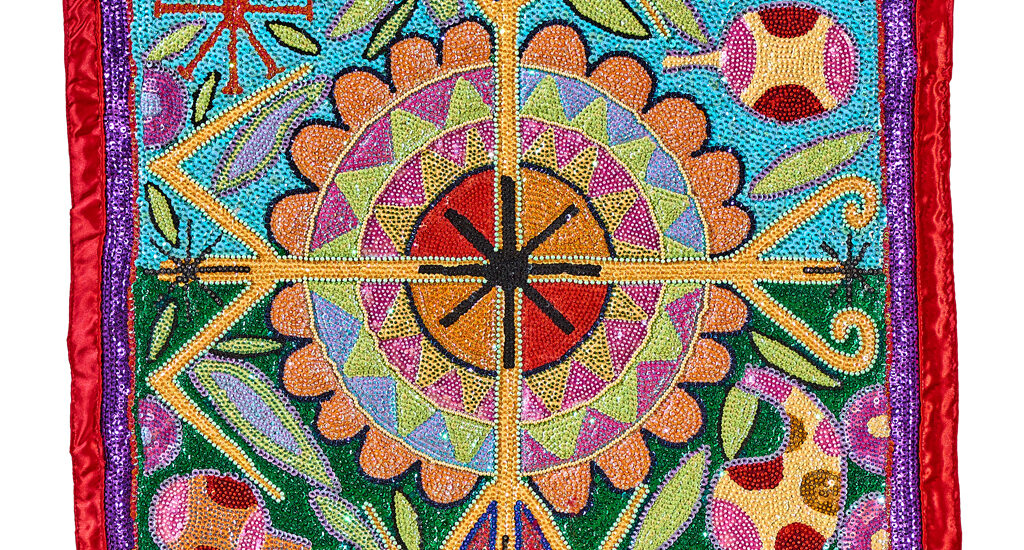
Haitian Arts Digital Crossroads (HADC) is devoted to documenting, preserving, and making accessible digitized visual art and related materials—including paintings, metalwork, drapo (Vodou flags), sculpture, archival materials, and born-digital or digitized works. The project seeks to redress historical gaps in provenance, elevate the work of Haitian and diasporic artists, and foster scholarly, community, and public engagement. The collection serves as a digital “lakou” — a shared, collaborative space across institutions, communities, and geographies—committed to ethical documentation, equitable representation, and cultural restitution.
2. Scope of the Collection
2.1 Types of Materials
- Digitized artworks (paintings, sculptures, metalwork, drapo, mixed media, textile art, etc.)
- Archival materials related to Haitian art: exhibition records, correspondence, catalogs, curatorial notes, provenance records, vertical files, photographs, slides, negatives, and related ephemera
- Born-digital or digitized materials (high-resolution images, metadata records, catalog entries, institutional documentation)
- Documentation of preservation, conservation, and digitization processes (e.g., condition reports, storage records, photographic checklists)
2.2 Geographic and Institutional Scope
- Works and archival materials held at partner institutions in Haiti, the United States, and across the Haitian diaspora
- Collections from public institutions (museums, galleries, libraries, community archives) as well as (when feasible) documented private collections—subject to provenance verification, rights clearance, and ethical review
2.3 Exclusions
HADC will not accept materials that lack legal transfer of ownership or the necessary copyright/usage permissions. Works posing insurmountable preservation hazards (e.g., severe deterioration, contamination), or those with unverifiable or undocumented provenance involving illicit acquisition, will be excluded unless resolved via satisfactory documentation.
3. Selection Criteria & Acquisition
HADC will consider materials for acquisition or digitization based on the following criteria, adapted from established archival and digital-collection guidelines. (ref. Library Digital Collections)
- Cultural and Scholarly Significance: Materials that document Haitian art traditions, artists, exhibitions, communities, and diasporic networks; works important for understanding Haitian visual culture, art history, social history, or diasporic identity.
- Uniqueness or Rarity: Priority to works or archival materials that are rare or not widely accessible elsewhere — e.g., lesser-known artists, undocumented collections, items not previously cataloged or digitized.
- Documentary Value: Materials that illuminate provenance, context, artist biography, artistic process, exhibition history, or community networks.
- Condition & Preservation Feasibility: Artworks or artifacts that can be safely handled, stored, and digitized without undue risk of damage. Digitization should ideally reduce handling of fragile originals.
- Rights & Ethics Compliance: Materials for which copyright, ownership, and moral-rights issues are clear or can be resolved; where digitization and online publication comply with copyright law, fair-use guidelines, or agreement with rights-holders. This encompasses what HADC refers to as “digital reparations”—ensuring that work is properly attributed, rights holders are respected, and artists’ cultural legacies are acknowledged.
- Accessibility and Use Potential: Priority for materials likely to support research, scholarship, teaching, community engagement, and public education; items otherwise difficult to access (e.g., private collections, fragile or dispersed works).
Digital acquisitions may occur via partnerships, donations, digitization agreements, or collaborative grants.
4. Metadata, Documentation & Description Standards
- HADC will utilize a metadata schema that reflects its “Going Beyond Provenance™️” methodology: beyond basic object data (title, artist, date, medium), records will include contextual information (provenance history, owner/collection history, previous exhibitions), material specifics (texture, construction, media, modifications), and cultural context (language, Kreyòl terminology, community or diasporic affiliations).
- Preservation metadata will record digitization details (file formats, capture conditions, lighting setups), object condition, any conservation work, storage location, provenance chain, and custodial history. This aligns with best practices for digital preservation metadata.
- Descriptive metadata will follow accepted archival standards and, when suitable, controlled vocabularies, along with flexible fields that accommodate Kreyòl terms or culturally specific categories.
- All records will indicate rights status and usage restrictions; for works with restricted rights or unclear provenance, metadata will flag limitations and provide guidance on access or use. These works will be segmented into the “HADC dark archives,” where the object will be acknowledged, but images and record details will not be available for public viewing.
5. Preservation, Storage, and Digital Stewardship
- HADC entrusts partnering institutions to store original physical works and archival materials in accordance with museum/archive-standard conservation practices: stable environmental conditions (climate control, humidity, pest management), proper storage enclosures, and minimal handling when not necessary.
- Digitization and photography protocols (e.g., lighting, use of neutral backgrounds or “white box” setups, harnesses for three-dimensional works) will be standardized to ensure consistency and high-quality imaging—especially important for reflective or textured surfaces (metalwork, drapo, mixed media).
- Partnering institutions maintain their digital master files and will provide HADC duplicate files that will be stored in a secure, stable, preservation-grade repository with regular integrity checks, format migration plans, and documentation of all preservation actions (fixity checks, versioning, backups). Metadata about preservation actions will be part of the record.
- When necessary, conservation work will precede digitization, particularly for fragile or deteriorating works, to avoid damage during imaging.
6. Access, Use, and Rights Management
- HADC aims to provide open access to digitized records and images whenever rights and permissions allow. Work will be done to respect artists’ rights, moral rights, and cultural context.
- When copyright or ownership is unclear (or when works originate from unknown artists, dispersed markets, or orphan works), HADC will carefully document available provenance and rights information.
- Images in the HADC collection will also be included in the Digital Library of the Caribbean (DLoC) and JStor for academic and research purposes only.
- All partner institutions retain ownership rights to their physical and digital holdings; HADC functions as a steward and facilitator, not as an owner or rights claimant.
- When possible, HADC will use licensing agreements (e.g., Creative Commons or other open-use agreements) or clearly indicate usage restrictions. Metadata will include rights statements for each object.
- Users of the platform will be required to acknowledge terms of use and to commit to ethical and respectful engagement with the materials—particularly in contexts involving sensitive cultural heritage, diaspora communities, or potentially sacred works (e.g., Vodou-related objects).
7. Collaboration, Partnership & Acquisition Strategy
- HADC will build and maintain partnerships with museums, galleries, cultural institutions, community archives, and scholars in Haiti, the U.S., and the Haitian diaspora. Collaborations may involve digitization agreements, shared metadata creation, and community-driven documentation.
- Institutions offering collections to HADC must provide provenance documentation, rights clearance, or a willingness to engage in rights negotiation and commit to long-term preservation and access standards.
- HADC welcomes contributions—but reserves the right to assess whether proposed materials meet selection criteria. As with standard archival practice, accessioning decisions will consider relevance, provenance, risk, and resource capacity.
- HADC will provide transparency and clear documentation for all acquisitions, stewardship activities, and collaborative arrangements.
8. Review, Deaccessioning & Sustainability
- The collection policy will be reviewed periodically (e.g., every 2–3 years) to ensure its alignment with evolving ethical standards, legal requirements (e.g., copyright law), technological changes, and community needs.
- In rare cases, deaccessioning or removal of materials from the digital collection may occur—for example, if rights issues arise, serious inaccuracies or provenance problems come to light, or if preservation risks cannot be mitigated. Deaccession decisions will follow a documented process that includes consultation with rights holders, stakeholders, and HADC partners.
- HADC will plan for long-term sustainability: ensuring funding, technical infrastructure, metadata maintenance, and community partnerships are in place to keep the HADC Digital Lakou active, accessible, and relevant for future generations.
9. Ethical & Cultural Responsibility
- HADC is committed to an ethical framework that centers Haitian and diasporic artists, prioritizes accurate representation, and acknowledges historical silences or erasures.
- The “Going Beyond Provenance™️” methodology encourages transparency about what is unknown — e.g., missing provenance, unknown artists — rather than erasing or sanitizing these gaps.
- HADC acknowledges the power imbalances in the art world and the history of displacement, exploitation, and misattribution that affect Haitian artists; the collection policy emphasizes restitution, cultural respect, and community inclusion.
- Sensitive or sacred objects (e.g., Vodou-related works) will be handled with additional care; access, display, or dissemination will be guided by cultural protocols, respect for spiritual traditions, and input from relevant communities.
The HADC does not own rights to material in its collections. Therefore, it does not license or charge permission fees for use of such material and cannot grant or deny permission to publish or otherwise distribute the material.
Ultimately, it is the researcher’s obligation to contact the partnering institution to assess copyright or other use restrictions and, when necessary, obtain permission from the partnering institution listed before publishing or otherwise distributing materials identified in the HADC’s collection.