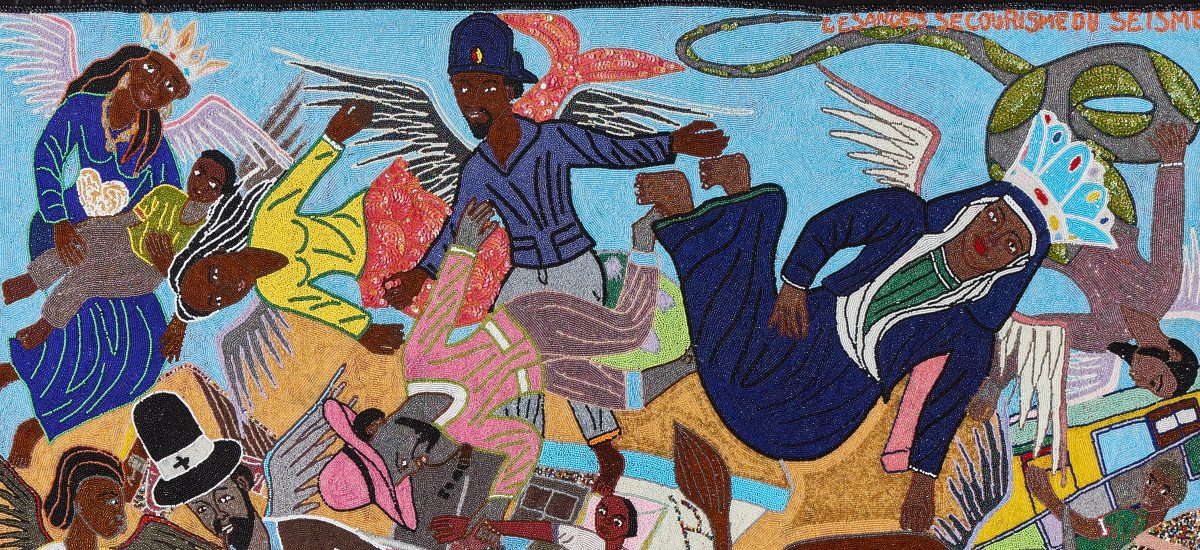
Evelyne Alcide (b. 1969)
Les Anges Secoursime du Seisme, c. 2014
Vodou Drapo, textile
WCA Collection
Haitian Art in IOWA
March 5th through 7th of 2020, the team will be hosting a workshop-style conference between Grinnell and Waterloo, IA.
The workshop for the NEH-funded project “Haitian Art: A Digital Crossroads” seeks to create critical dialogues regarding the field of Haitian art history. Gathering prominent scholars, museum professionals, and digital humanities experts working with Haitian art, history and culture, the workshop intends to promote collaborations across institutions and individuals. Specifically, we aim to discuss the current state of the field, especially given the disparate or scattered nature of archival sources and artists estates, as well as the dispersion of works of art across private and public collections. How can we build a more rigorous Haitian art history, and how can we use digital resources and interdisciplinary methodologies to expand knowledge within the field? Working with the Waterloo Center for the Arts and Grinnell College Libraries, the project “Haitian Art: A Digital Crossroads” has considered best practices for metadata, photographic documentation, and database platforms for Haitian art, and has conducted extensive research regarding Haitian art collections and exhibitions. The workshop builds upon our research, and will strategize ways the digital humanities can be used to support academic and curatorial research regarding Haitian art.
Our discussions will provide a catalyst for future endeavors in the field, considering institutional and individual needs alongside new innovative practices for promoting the arts from the world’s first Black republic.
KEYNOTE ADDRESS
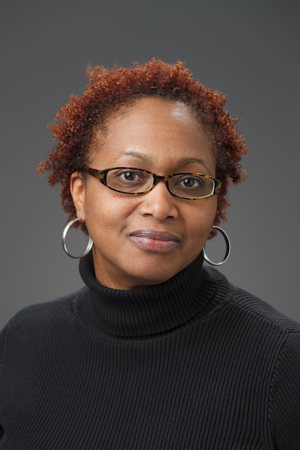
Jerry Philogene, Associate Professor in the American Studies and Africana Studies Departments at Dickinson College will be giving a talk entitled “Death, Freedom, Epistemologies: The Radical Labor of Haitian Aesthetic,” supported by Grinnell College’s Peterson Lecture in Art History.
Philogene received her doctorate from New York University in American Studies. In addition to exploring the intersections of race, ethnicity, class, and gender as articulated in contemporary visual arts, her research and teaching interests include interdisciplinary American cultural and art history, Caribbean art history and visual arts, (with an emphasis on the Francophone Caribbean), black cultural politics, and theories of the African diaspora. Her articles have appeared in Small Axe: A Caribbean Journal of Criticism, BOMB Magazine, Contemporary French and Francophone Studies, Radical History Review, MELUS: Multi-Ethnic Literature of the United States, and the Journal of Haitian Studies. She has published numerous art exhibition catalogue essays. She was a co-editor of a special issue of Small Axe (March 2017) that focused exclusively on the work of women artists from the Caribbean and diaspora. In the academic year 2017-2018 she was a Humanities Writ Large Visiting Faculty Fellow at Duke University where she worked on her book manuscript, The Socially Dead and Improbable Citizen: Theorizing Visual Transformations of Haitian Citizenship, which provides a rich textured analysis of the power of visual arts and its complex relationship between violence, domination, and liberation through an exploration of painting, photography, and film. In summer 2019, she will be an Ailsa Mellon Bruce Visiting Senior Fellow at the National Gallery of Art, Center for the Advanced Studies of the Visual Arts.
From Tilting Axis, 2019give
WORKSHOP ORGANIZER
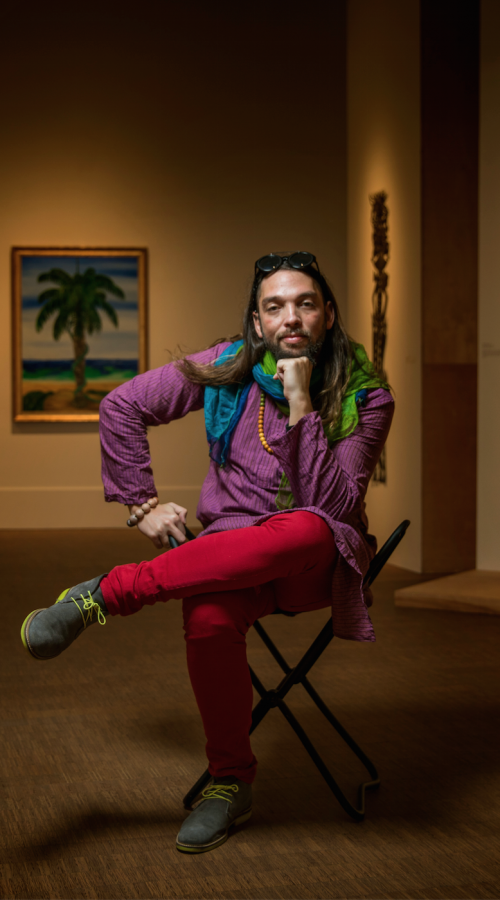
Art and architectural historian Fredo Rivera is Assistant Professor of Art History at Grinnell College, where they teach classes on modern and contemporary architecture and urban visual culture, as well as the art of the Americas, with a focus on the Caribbean. Professor Rivera’s current research includes art and architecture in modern Cuba, Haitian art, photography and visual culture, and the relationship of the art world and real estate development in contemporary Miami.
Rivera completed their dissertation “Revolutionizing Modernities: Visualizing Utopia in 1960s Havana, Cuba” in July 2015. They previously served as an Andrew W. Mellon Predoctoral Fellow at the Center for Advanced Study in the Visual Arts (CASVA) at the National Gallery of Art in Washington, D.C. (2011-2013). He was also a Research Affiliate at the University of Miami School of Architecture (Spring and Fall 2010) as well as a Social Science Research Council DPDF fellow (Summer 2008). Prior to arriving to Grinnell, Dr. Rivera was Visiting Assistant Professor at the School of Architecture at Florida Atlantic University.
Professor Rivera has worked on a number of exhibition projects, including: The Elusive Master: Emmanuel Merisier, from Haiti to beyond (Little Haiti Cultural Complex), Edouard Duval-Carrié: Metamorphosis (Museum of Contemporary Art-North Miami), From Within and Without: The History of Haitian Photography (NSU Art Museum-Ft. Lauderdale), Nation on the Move – the Puerto Rican Diaspora: Photographs by Frank Espada (Duke University Libraries), and Building Broward: A Guide to a Century of Architecture (Florida Atlantic University & Broward Cultural Division). She also performs in drag as Lolita Cabrón, and Prof. Rivera has curated two major queer art happenings: Yo Soy La Mala: drag en el exilio (Centro Cultural Español-Miami) and Tidal Rage: drag en la frontera (Pérez Art Museum Miami with Creative Time). Their most recent publications explore the role of public art and architecture within the context of contemporary Miami as well as architecture within late modern and contemporary Cuba.
In addition to their Ph.D., Rivera has a Graduate Certificate in Latin American & Caribbean Studies from Duke University (2015), a Masters of Art in Art History from Duke University (2010), and a Bachelor of Arts (Africana Studies and Art History, with honors) from Grinnell College (2006).