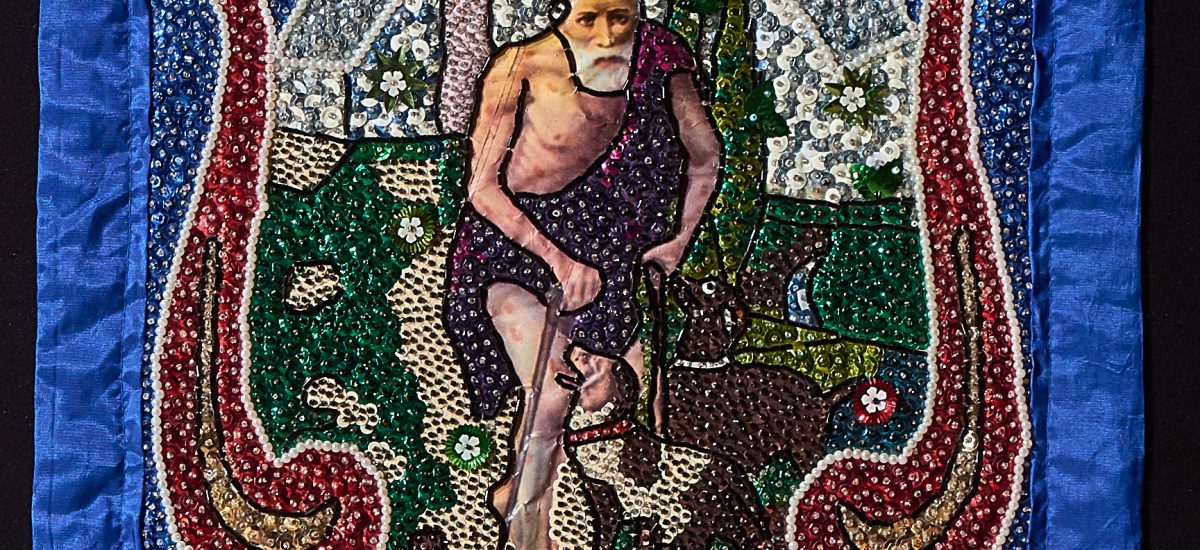
Roudy Azor / Simbi Marassa, c. 2000 / Cloth, sequins and beads / WCA Collection
Drapo are decorative flags that use sequins—often along with beads or other materials—to create vivid, symbolic imagery. They are also known as Haitian flags, Haitian drapo, or Vodou flags.
Photographing Vodou drapo presents several challenges. Because these works are built from multiple layers of materials, capturing their depth is essential. Proper lighting is critical but can be difficult to achieve, especially when the flags are framed behind glass, where reflections can obscure details or reduce the overall quality of the image.

Some drapo feature multiple layers of sequins, often stacked in similar colors, along with other reflective materials sewn on top. One flag that proved especially challenging to photograph was an untitled work attributed to Rockville (pictured at left, with a detail below). Large areas of the same-colored sequins and plastic elements stitched over the imagery made it difficult to capture the piece clearly. Although we were able to reduce most reflections, some glare remains, indicating the presence of a highly reflective plastic surface.

Another flag that we found particularly difficult to photograph was Lionel St. Eloi’s Damballah flag. Rich in texture and hues of silver and café, the flag cleverly depicts a vodou altar and the symbol for Damballah within a woman-like bust.

Photographing this flag posed challenges because its surface reflected so much light, making it difficult to record both the fabric’s sheen and the fine detail of the sequins. In the end, we combined two images taken under different lighting conditions and layered them to capture all the necessary details. This approach helped us render the texture accurately. The method is similar to the HDR function used automatically by many smartphones in bright daylight, which merges multiple exposures to preserve more visual information. For highly reflective works like many drapo, composite imaging proved especially effective.
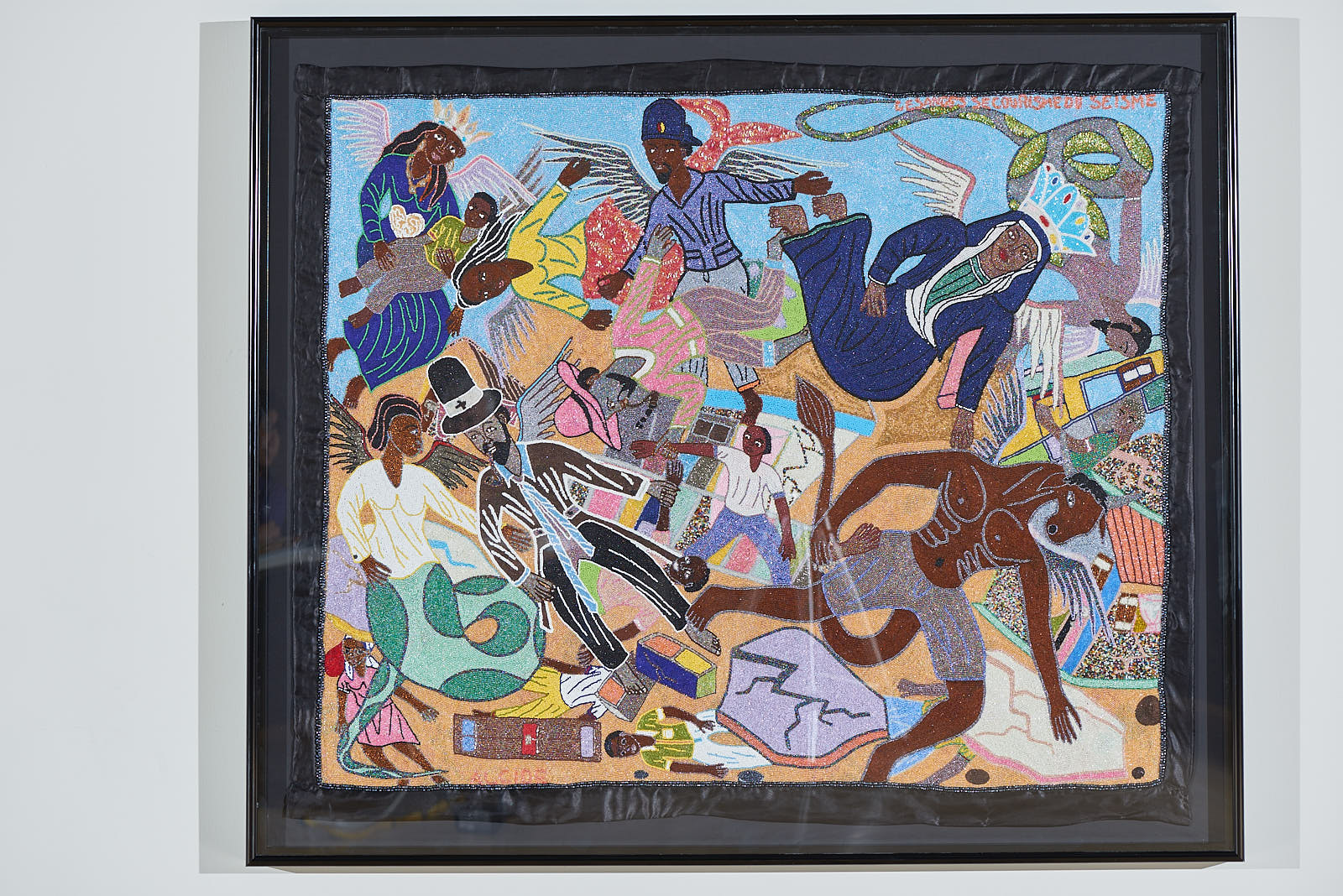
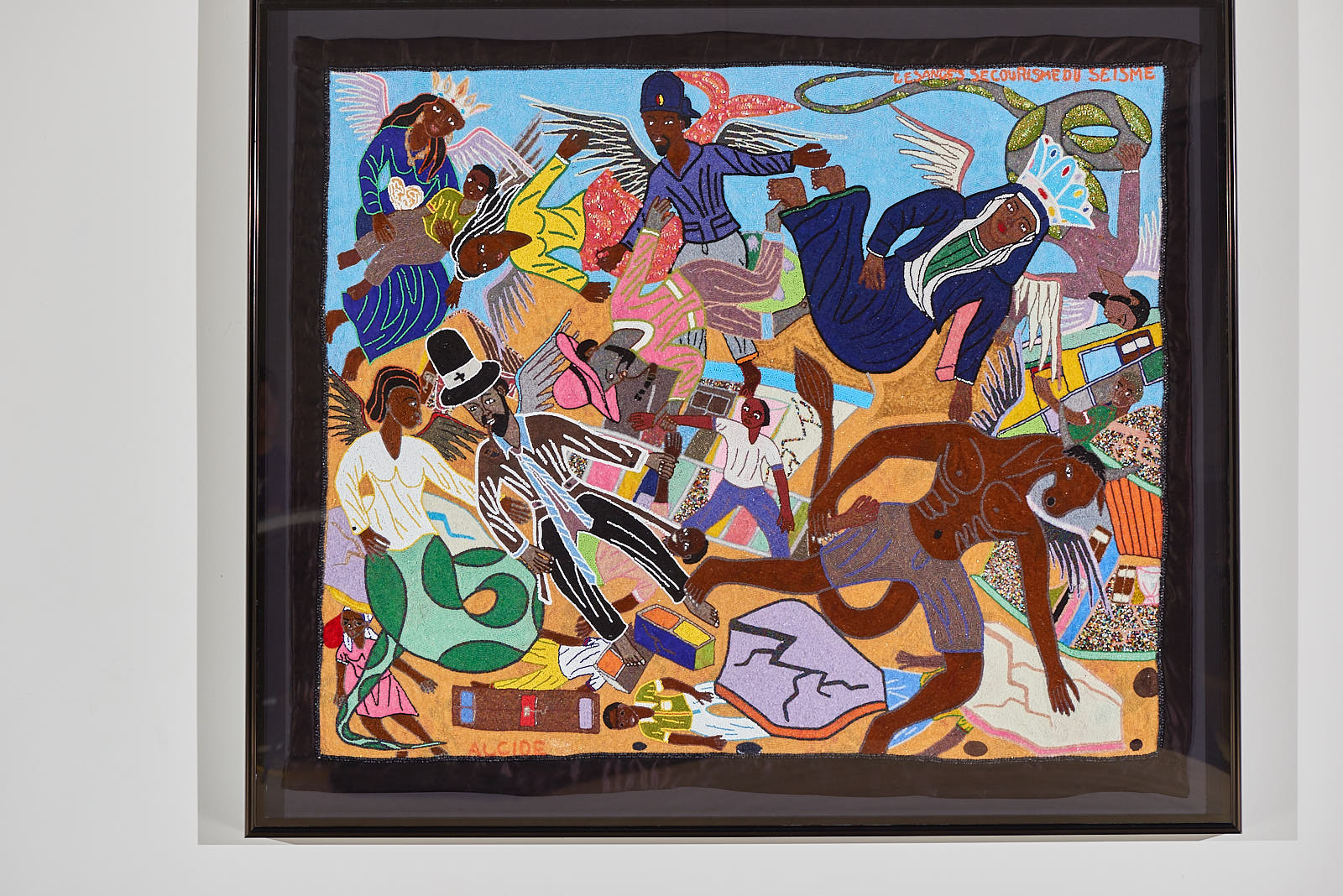
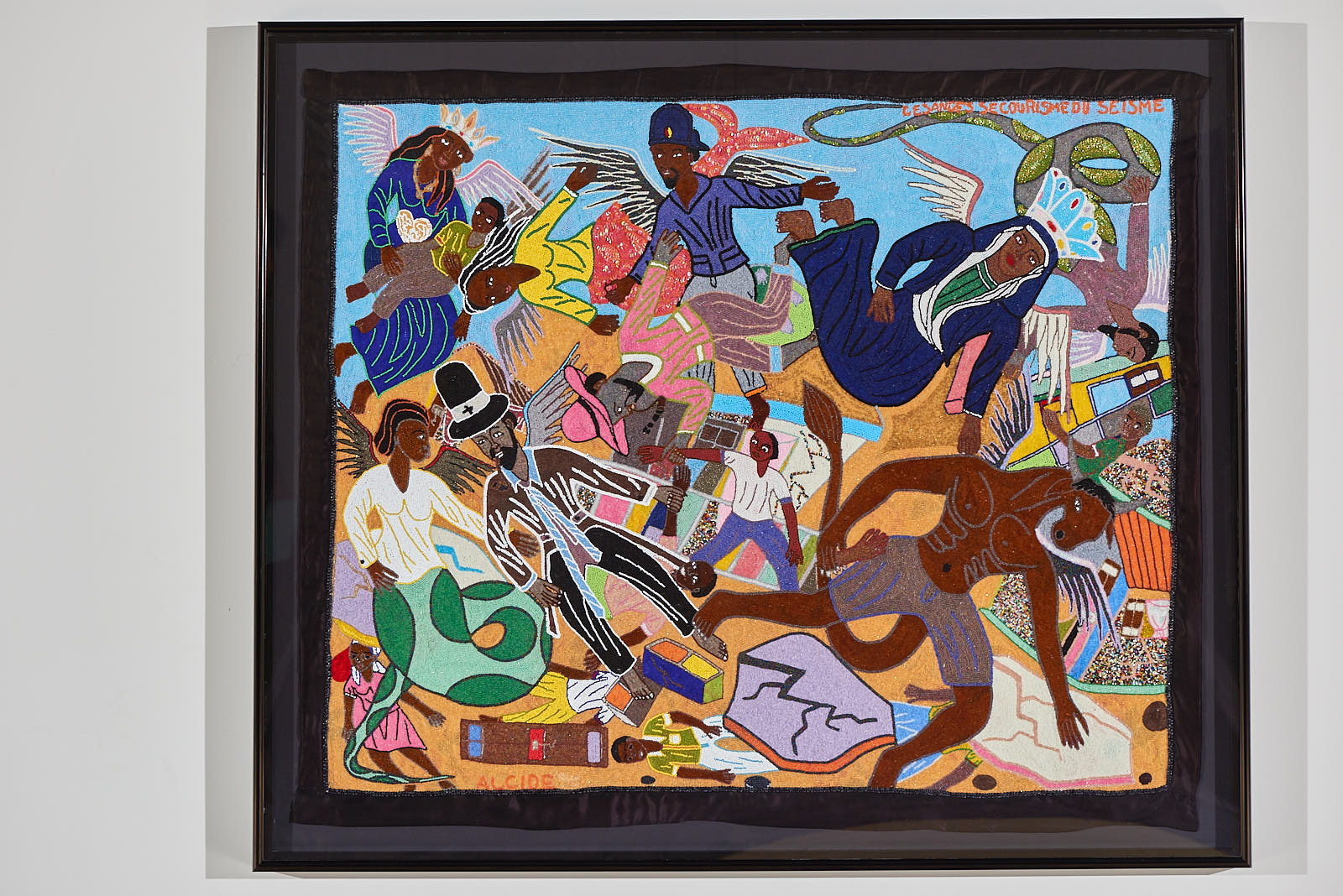
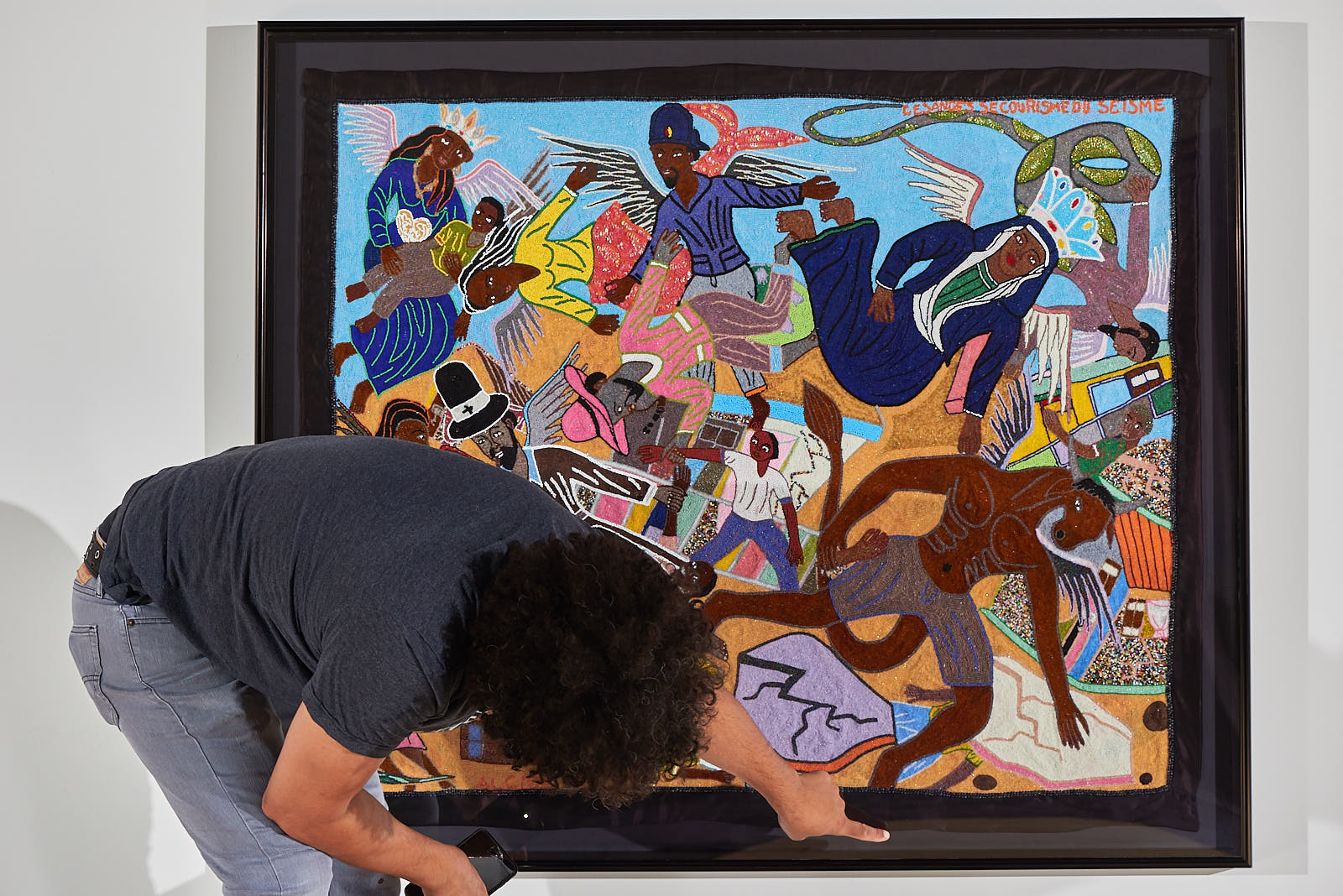
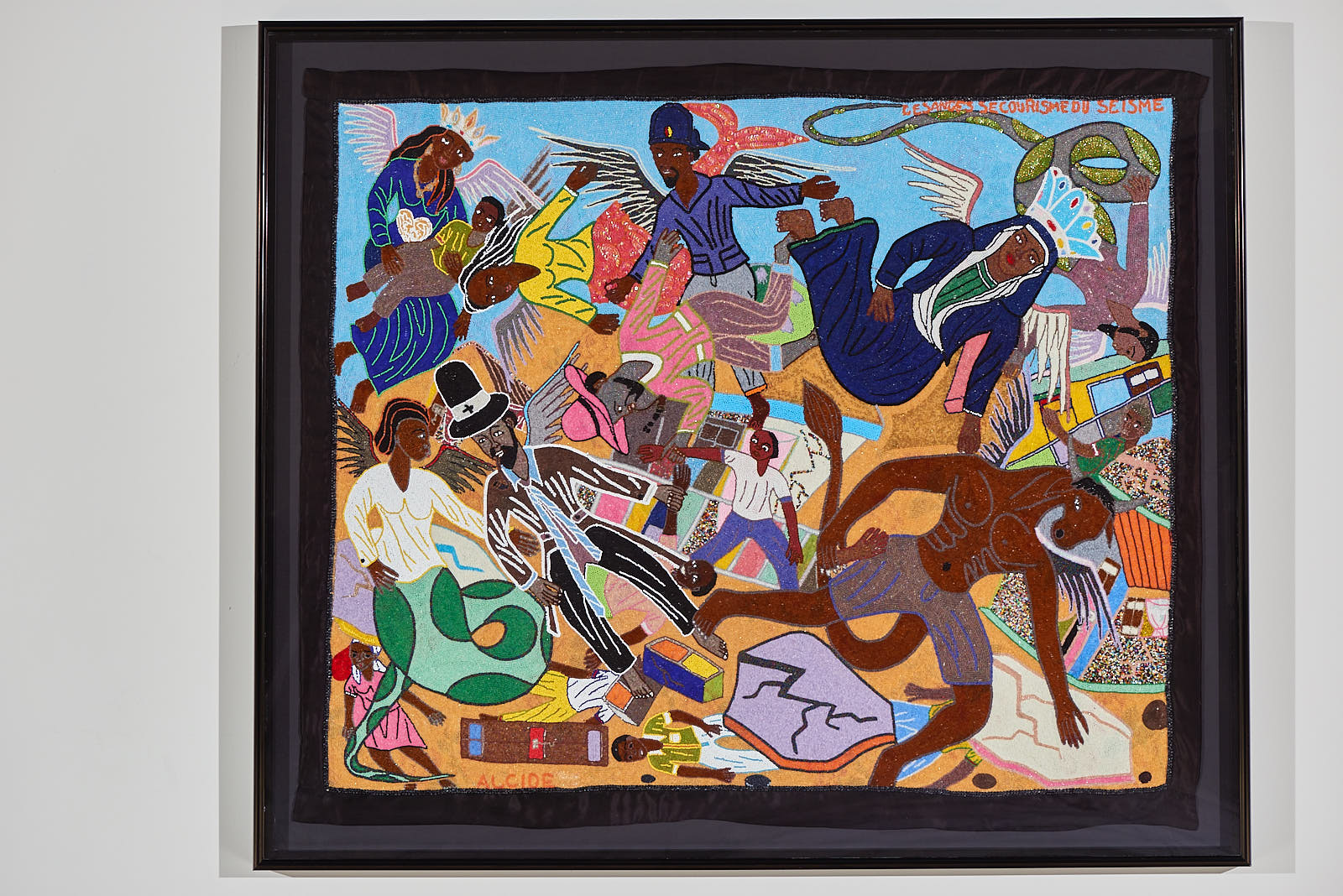
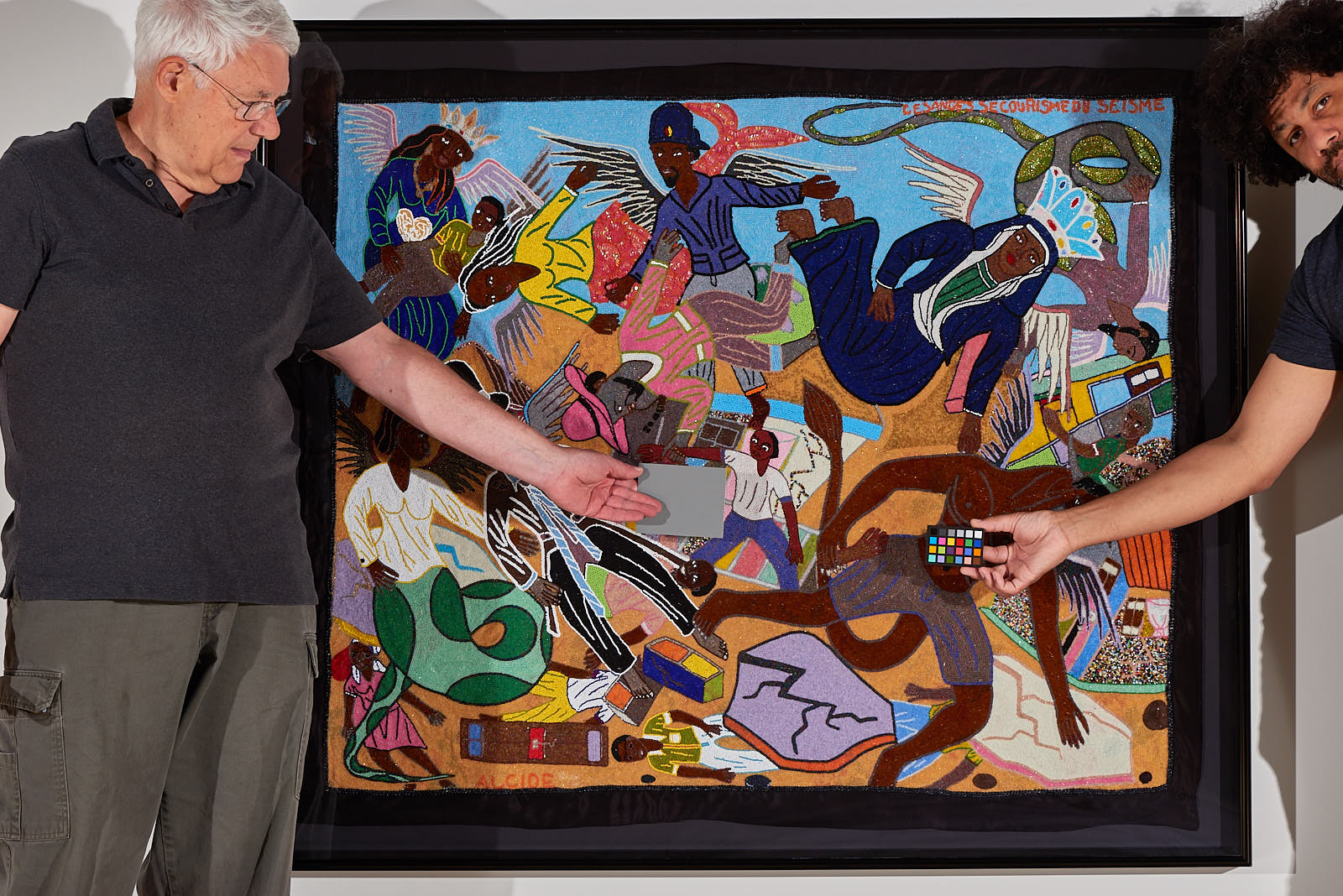
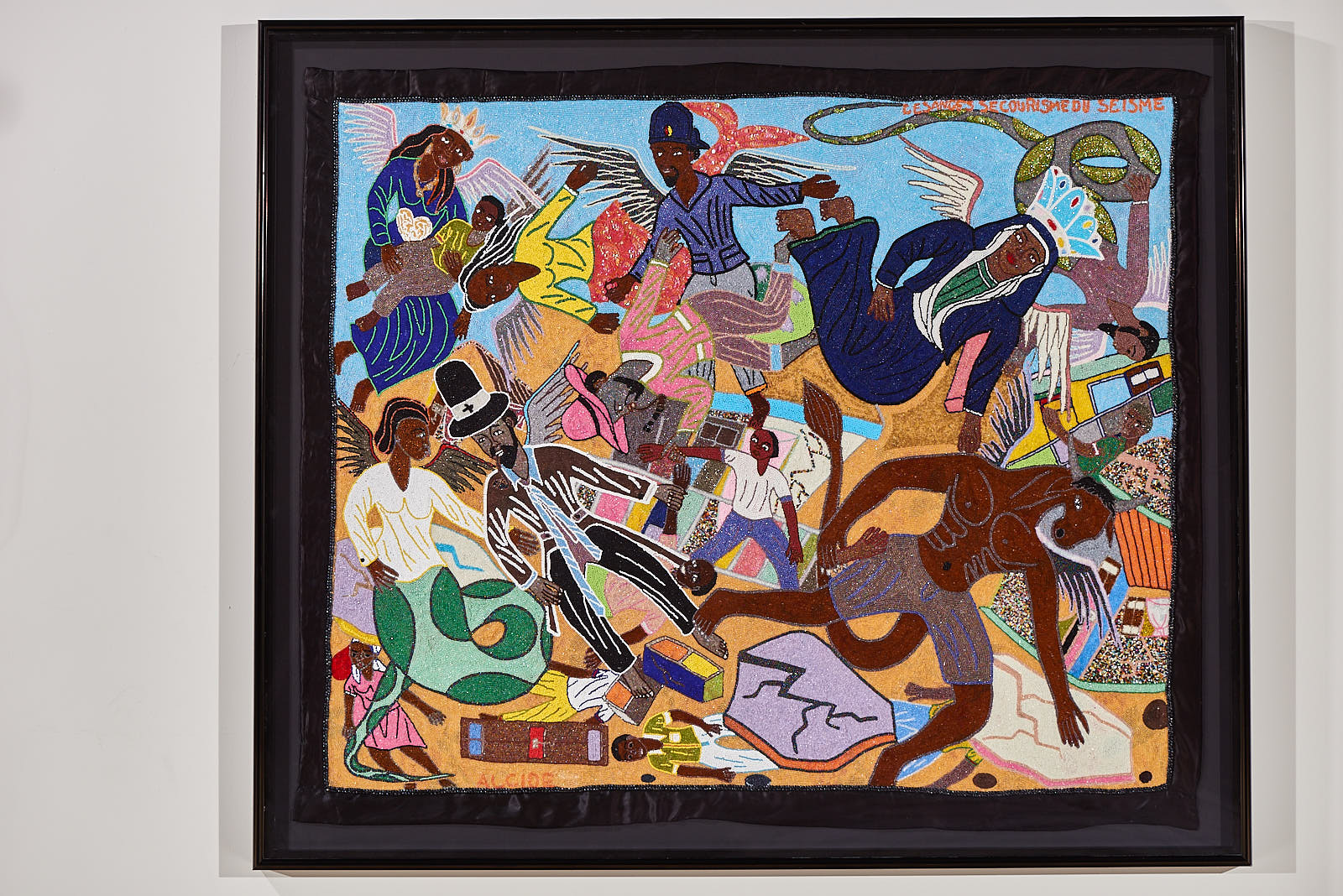
Vodou drapo bridges the sacred and the everyday: they serve spiritual purposes yet are also produced for international audiences. In Evelyn Alcide’s Les Anges Secourism de Siesme (c. 2014), that relationship becomes explicit, as a pantheon of Vodou spirits appears within the context of post-earthquake Haiti. The layered imagery in works like this mirrors their material complexity, making them challenging to photograph. As shown in the images below, capturing Alcide’s piece required experimentation with color settings and lighting adjustments. Photographer Jerry Grier and curator Chawne Paige worked together to find the conditions that best conveyed the work’s brilliance. Both delicate and vibrant, these pieces demand careful attention to lighting and color to record their intricate beauty.